Overview
The Quadrant D16 - Rural Life of Filipinos in the 17th Century (Murillo Velarde 1734 Map)
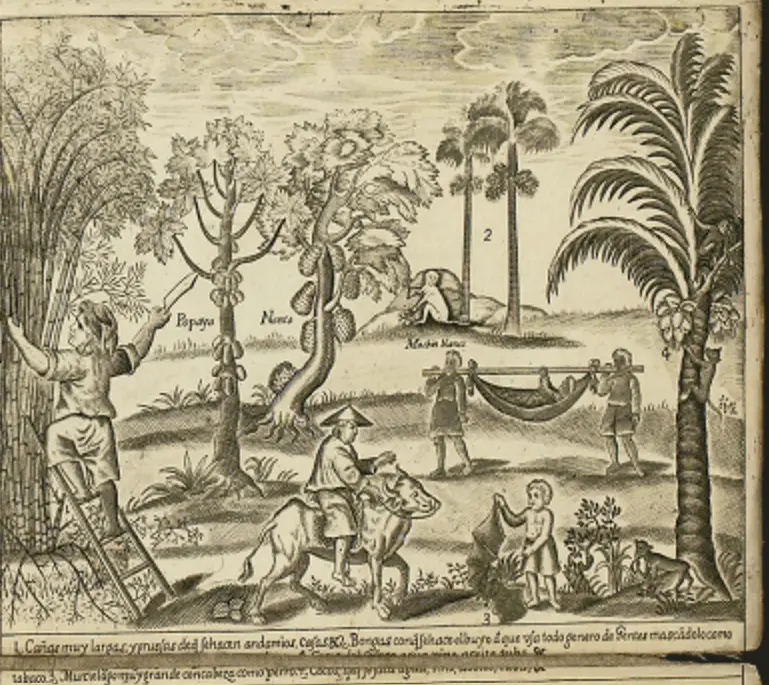
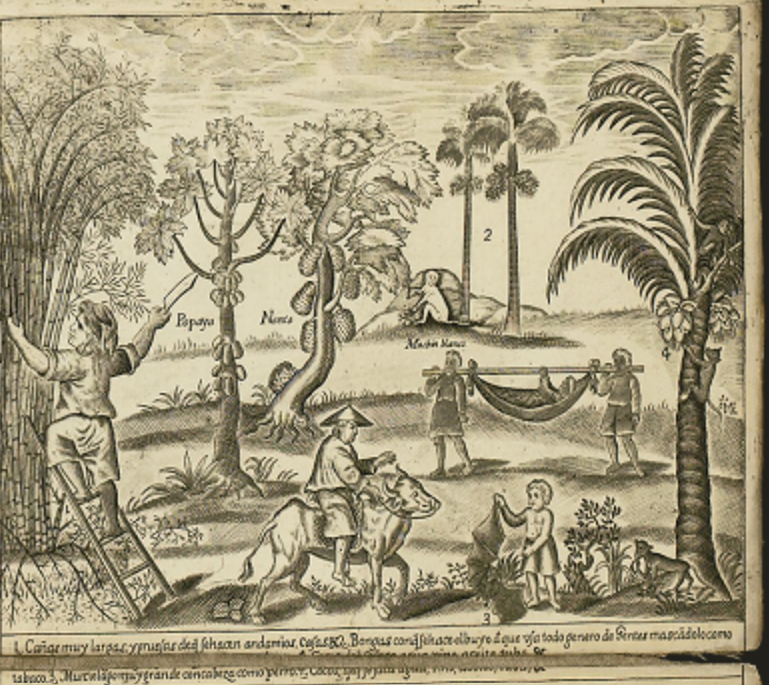
This illustration from the Murillo Velarde 1734 map provides an ethnographic glimpse into rural life in the Philippines during the Spanish colonial period. It depicts various elements of daily life, agriculture, and social customs in the 17th century.
-
Agricultural Practices
-
A man harvesting bamboo (cañas) using a ladder, showing early Filipino forestry or construction material gathering.
-
Presence of papaya (Papaya) and jackfruit (Nanca) trees, highlighting important local crops.
-
A coconut tree, a staple in Philippine agriculture, with a monkey possibly being used to help harvest coconuts—a common practice in Southeast Asia.
-
Livelihood and Transport
-
A Filipino man riding a carabao (water buffalo), reflecting the central role of carabaos in farming and transportation.
-
A hammock being carried by two men, likely transporting a higher-status individual or an ill person, demonstrating traditional travel methods.
-
Social and Daily Life
-
A small child holding a cloth, possibly involved in daily household chores.
-
A native resting near a hut, indicative of traditional nipa hut dwellings.
-
The text mentions "Cañas muy largas y gruesas del tamaño ordinario," describing large bamboo used in local construction.
-
Symbolism and Spanish Perspective
-
This quadrant presents a Spanish colonial interpretation of Filipino rural life, emphasizing agriculture, simplicity, and local customs.
-
The presence of illustrated native attire and activities gives insight into the daily routines of early Filipinos.
Historical Context & Significance:
-
Agricultural Prosperity: The image shows that Filipinos had a well-developed farming system even before deep Spanish intervention.
-
Colonial Representation: The Spaniards often depicted natives as simple agricultural people, reinforcing their colonial narrative.
-
Trade & Resources: The depiction of bamboo, coconuts, and fruit-bearing trees highlights the Philippines' role as a resource-rich colony.
Sorry, no results matching your search criteria were found.
Locations
This is a primary location.