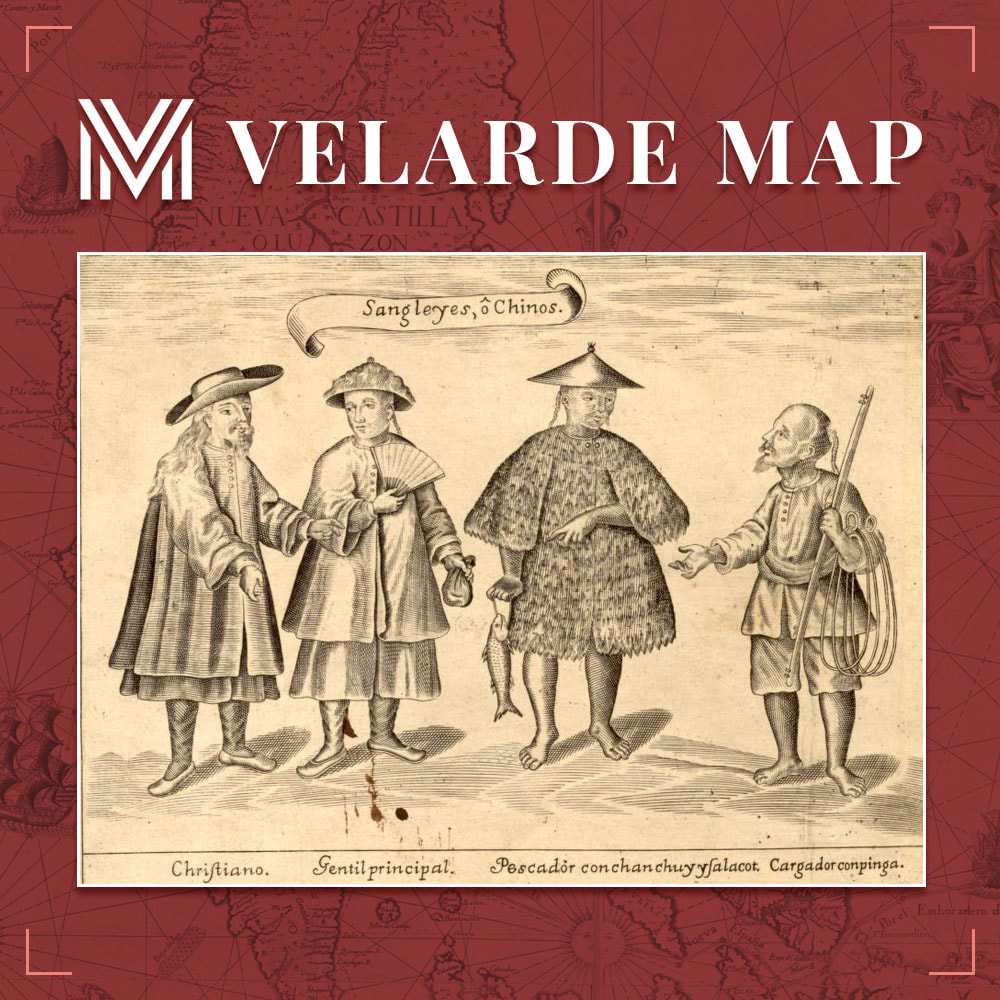
Quadrant A1 Sangleyes o Chinos

Quadrant A1 Sangleyes o Chinos

@quadrantA1-sangley-o-chinos

Associated Sub Page

Murillo Velarde 1734 Map

Recently Viewed Pages

  • 0 Likes 0 Comments 20.3K Views 0 Favourites
  • 2 Likes 0 Comments 13.4K Views 1 Favourite
  • 0 Likes 0 Comments 5.8K Views 0 Favourites

Overview

Here are key insights from this section of the map: Quadrant A1 of the Murillo Velarde 1734 map, titled "Sangleyes, ó Chinos", which depicts Chinese settlers (Sangleys) in the Philippines during the Spanish colonial era. Here are some insights:

1. Depiction of Chinese Roles in Society

  • The illustration presents four different figures, each representing a specific role within the Chinese community in the Philippines:

    • "Christiano" (Christian): A Chinese individual who has converted to Christianity, identifiable by European-style clothing and a beard.

    • "Gentil principal" (Non-Christian Noble/Wealthy Gentleman): Wearing traditional Chinese attire, possibly a trader or elite member of the community.

    • "Pescador con chanchuy y galaut" (Fisherman with net and raincoat): Dressed in a straw or fur raincoat, holding a fish, representing common laborers involved in the fishing industry.

    • "Cargador o cumpingas" (Porter or Carrier): A laborer carrying goods, likely a dockworker or transporter.

2. Significance of the Sangley Community

  • The term "Sangley" was used by the Spanish to refer to Chinese immigrants who came to the Philippines primarily as traders and merchants.

  • Many Chinese settlers played a crucial role in commerce, craftsmanship, and local industries.

  • The Spanish government initially tolerated and encouraged Chinese immigration for economic purposes but later imposed restrictions due to conflicts and revolts.

3. Cultural and Social Representation

  • The attire and accessories highlight the diverse occupations of the Chinese in the Philippines.

  • The depiction of a Christianized Sangley reflects Spanish colonial efforts to convert the Chinese population to Catholicism.

  • The trader's fan and long robes suggest the wealth and influence of Chinese merchants.

  • The fisherman’s raincoat (likely made of palm or straw fibers) represents practical attire for laborers working in wet conditions.
